cogvalveفارسی
Ball valves
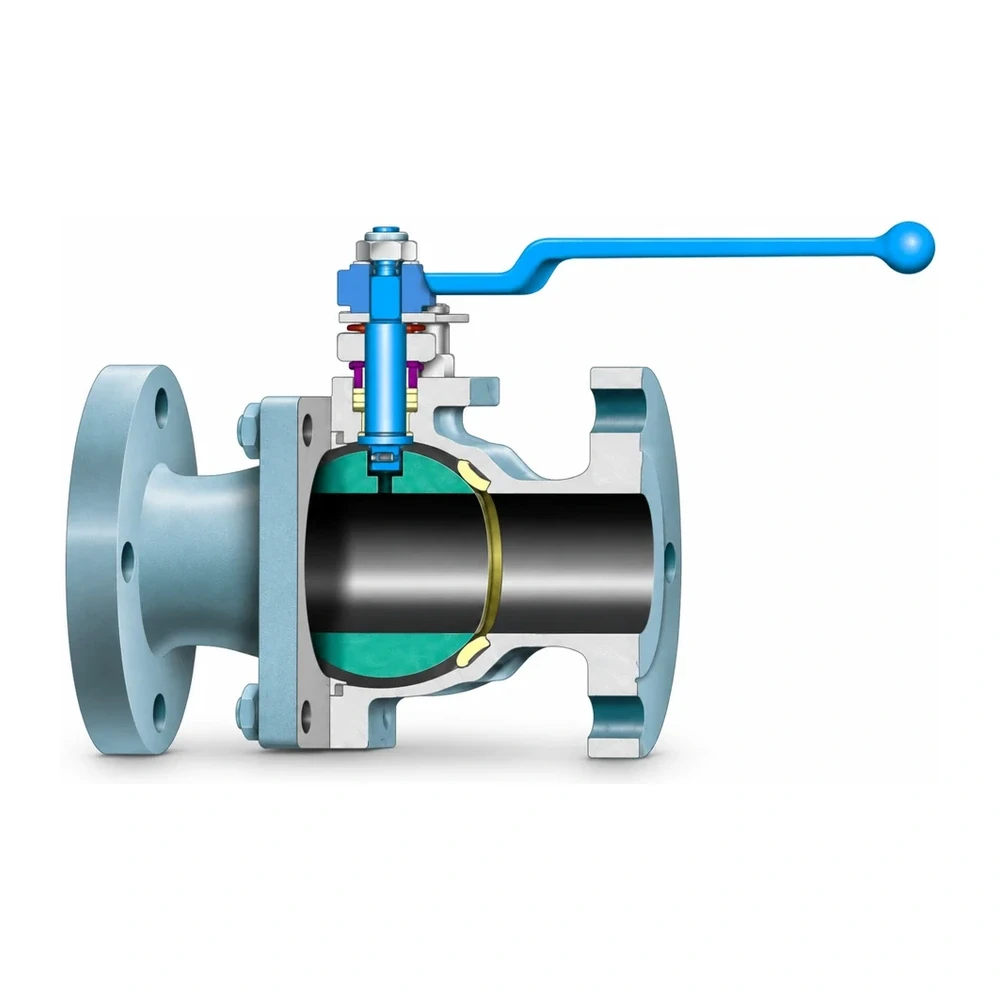
Valve-family illustration; does not verify the exact configuration, dimensions or stock availability.

Ball valves

25 models in this family

Review the listed models and configurations in this family, then select one for a quotation request.

Selected model

Ball valve 56 in, Class 600, LCB

Ball valve with the listed size of 56 in, pressure Class 600 and material designation LCB. This defines a specific enquiry configuration; connection type, operation and any additional requirements must be confirmed in the technical enquiry.

Selected model specifications

Listed size56 in
Pressure class600
Listed material designationLCB

Models and configurations

Select a configuration. The family image changes only when the model has a distinct illustration.

One-piece welded ball valveBody construction: Welded, non-dismantlable assembly · Ball and bore: Floating ball; full or reduced bore · Body materials: A105N / 316L / A350 LF2 · Ball and stem: 316L · Seats: Carbon-filled PTFE · End connections: NPT / SW / BW / Flanged · Configuration classes: 800 / 1500 / 2500 · Control options: Position lock, dead-man lever, pneumatic actuatorThis floating-ball valve uses a welded body assembly that forms a non-dismantlable unit. The floating ball provides bidirectional shut-off, with full-bore and reduced-bore configurations. An anti-blowout stem, graphite stem seal and spring washers maintain sealing contact as the components change temperature. Body material choices include A105N carbon steel, 316L stainless steel and A350 LF2 low-temperature steel. The ball and stem are 316L, with carbon-filled PTFE seats as the standard arrangement. NPT threaded, socket-weld, butt-weld and flanged connections are described, including mixed end connections. Locking hardware, a spring-return dead-man lever and pneumatic actuation are control options.
Two-piece trunnion-mounted ball valveConstruction: Two-piece bolted body; trunnion-mounted ball · Bore: Full or reduced bore · Seat seal: Glass-filled PTFE; spring loaded · External sealing: O-ring with graphite backup · Design: ASME B16.34 / API 6D · Flanges: ASME B16.5 · Classes: 150 / 300 / 600The two-piece trunnion-mounted ball valve has a body and end connector with a single body joint. A lower trunnion and stem support the ball under full rated differential pressure. Self-lubricating bearings, spring-loaded seats and an anti-blowout arrangement for the stem and lower trunnion are central to the design. A metal seat carrier supports the soft sealing element for low-pressure shut-off. Automatic body-cavity pressure relief and double-block-and-bleed functionality are described. External sealing uses an O-ring with graphite backup. Full and reduced bores, ASME B16.5 flanges and glass-filled PTFE seat seals form part of the configuration.
Two-piece floating ball valveConstruction: Two-piece bolted; floating ball · Body: Carbon steel or stainless steel · Body gasket: Graphite/316 spiral wound · Sealing elements: Glass-filled PTFE · Connections: Flanged · Bore: Full or reduced boreThis configuration is a floating-ball valve with a two-piece bolted body. Full-bore and reduced-bore versions are described with flanged ends. Its floating-ball construction is distinct from a trunnion-mounted arrangement and should be identified when selecting the valve. Body options are carbon steel or stainless steel. The body joint uses a graphite-and-316 stainless steel spiral-wound gasket, while glass-filled PTFE is specified for the other sealing elements. These details distinguish the two-piece floating configuration.
Three-piece trunnion-mounted ball valveConstruction: Three-piece bolted; trunnion mounted · Size exception: 2–4 in: two-piece body · Body: Carbon steel · Trim: Carbon steel or stainless steel · End connections: Flanged / BW · Classes: 150 / 300 / 600 / 900 / 1500 / 2500This trunnion-mounted ball valve uses a three-piece bolted body across several pressure classes. Sizes from 2 to 4 inches are explicitly described as a two-piece exception, so body construction needs to be specified together with the valve size. The body is carbon steel, with carbon-steel or stainless-steel trim. Flanged and butt-weld ends are listed. The trunnion supports the ball against differential-pressure loads, distinguishing this arrangement from a two-piece floating-ball valve.
Top-entry ball valveConstruction: One-piece body; top access to internals · Body materials: Carbon steel, low-temperature steel, stainless steel · Seats: Filled PTFE / PEEK · Packing: Expanded graphite · End connections: Flanged / BW · Design: ASME B16.34 / API 6D · Metal-seat options: Hard chromium, Stellite or tungsten carbideThe top-entry ball valve has a one-piece body with access to the internals through the bonnet. This permits top access even when the valve is welded into a pipeline. A shouldered stem is assembled from inside the bonnet, and self-lubricating bearings help reduce operating torque. Body materials include carbon steel, low-temperature steel and stainless steel. Filled-PTFE or PEEK seats, expanded-graphite packing and flanged or butt-weld ends are described. Options include metal-to-metal seating with hard chromium, Stellite or tungsten-carbide surfaces, stem extensions, a low-temperature extension, drain valves and sealant injection.