cogvalveفارسی
Level instruments

Level instruments

4 models in this family

Review the listed models and configurations in this family, then select one for a quotation request.

Selected model

Level gauge for steam service

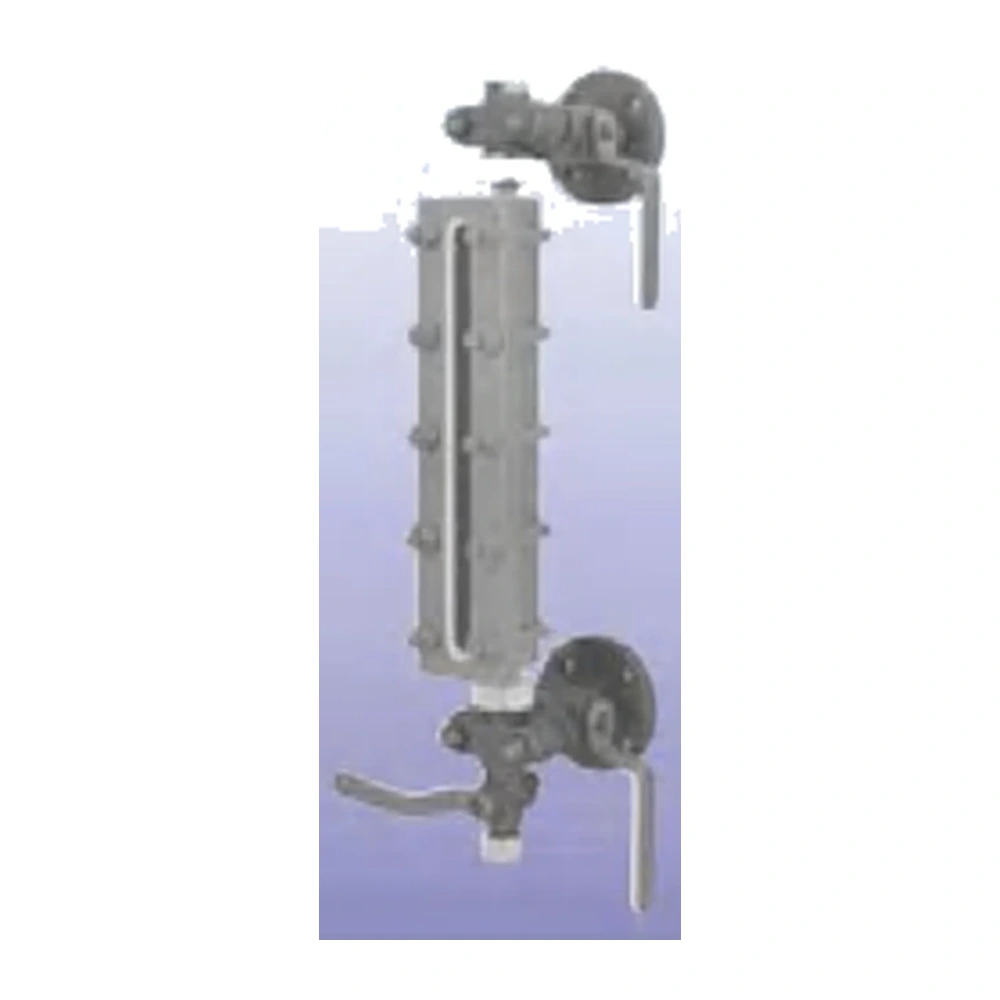
The steam-service level gauge provides direct level observation together with dedicated gauge valves. Reflex, transparent and bi-colour glass arrangements are described for steam duties, with the family stated for pressures up to 175 bar. A reflex gauge uses prismatic glass to give liquid and vapour phases different appearances. A transparent gauge shows the fluid between two flat glasses, with mica protection described for the glass. Glass type, sealing stack and gauge valves need to suit the steam pressure and temperature.

Selected model specifications

ServiceSteam
Display typesReflex / Transparent / Bi-colour
Family pressure rangeUp to 175 bar
Glass protectionMica protection option

Models and configurations

Select a configuration. The family image changes only when the model has a distinct illustration.

Level gauge for steam serviceService: Steam · Display types: Reflex / Transparent / Bi-colour · Family pressure range: Up to 175 bar · Glass protection: Mica protection optionThe steam-service level gauge provides direct level observation together with dedicated gauge valves. Reflex, transparent and bi-colour glass arrangements are described for steam duties, with the family stated for pressures up to 175 bar. A reflex gauge uses prismatic glass to give liquid and vapour phases different appearances. A transparent gauge shows the fluid between two flat glasses, with mica protection described for the glass. Glass type, sealing stack and gauge valves need to suit the steam pressure and temperature.
Level gauge for process serviceTypes: Reflex / Transparent · Family pressure range: Up to 300 bar · Visible length: 95–2840 mm · Connection orientation: Right or left; inside or outside offset · Connection: Flanged arrangementThe process-service level gauge is described in reflex and transparent versions. The transparent arrangement uses front and rear glasses with sealing and cushion gaskets to view the fluid and, when appropriately selected, a liquid interface. Mica protection is an option for suitable duties. The family is described for pressures up to 300 bar and visible lengths from 95 to 2840 mm. Right- or left-hand connections and inside or outside offsets are available with flanged arrangements. Selection requires the fluid, working and design pressure and temperature, visibility, connection centres and gauge-valve configuration.
Magnetic level gaugePrinciple: Magnetic float with external indication · Float: Stainless steel or titanium · Standard connections: Flanged DN15–DN50 · Family pressure envelope: Up to 200 bar · Family temperature envelope: −10 to +400 °C · Minimum specific gravity: 0.400 · Maximum connection centres: Stainless steel: 6500 mm; polymer: 3500 mmThe magnetic level gauge consists of a tubular chamber, a float with an embedded magnet and an external scale. Float motion is transmitted to magnetic rollers or a following indicator, so level reading does not require a viewing glass directly exposed to the fluid. A stainless-steel chamber and stainless-steel or titanium float are described, with polymer chambers also offered for corrosive duties. Standard flanged connections are DN15–DN50. The family envelope includes pressures up to 200 bar, temperatures from −10 to +400 °C and a minimum fluid specific gravity of 0.400; the usable combination depends on materials and duty.
Magnetic level switchOperation: Float and magnetic piston · Installation: Internal or external chamber · Direct connection: Minimum DN100 / 4 in · Float materials: Stainless steel / Titanium / Monel / Hastelloy · Contacts: Microswitch, reed, inductive; three-way pneumatic · Standard enclosure type: IP65The magnetic level switch senses tank-level changes using a float connected to a magnetic piston and operates an electrical or pneumatic contact. The float can be mounted inside the vessel from the roof or side, or in an external chamber connected to the tank. Direct mounting is described with a minimum DN100 or 4-inch flanged connection. External chambers may use flanged, threaded or welded connections. Stainless-steel, titanium, Monel and Hastelloy floats, microswitch, reed and inductive electrical contacts, and a three-way pneumatic contact are listed options.